Can You Deduct Home Office Expenses as a W-2 Employee?
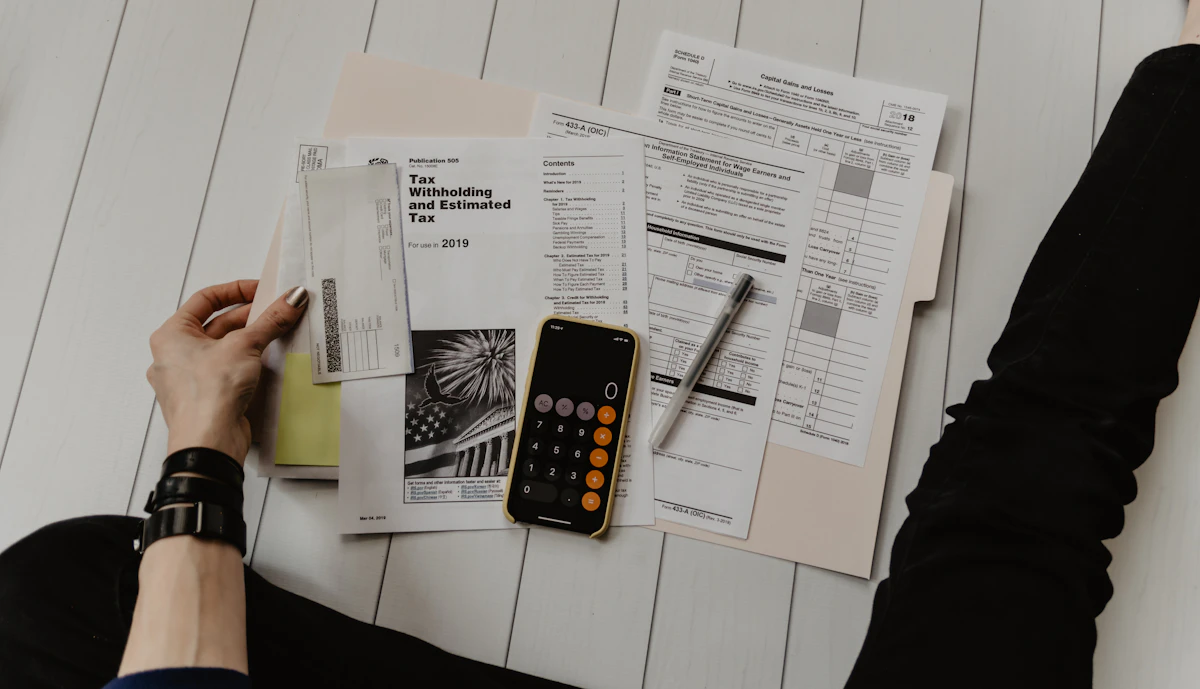
Every tax season, the same question lands in TurboTax community forums: "I work from home two days a week. Can I deduct my desk, my internet bill and half my rent?" For the millions of Americans who draw a W-2 paycheck, the short answer has been the same since 2018 — but it comes with a seven-state footnote that trips up even careful filers. This guide walks through the federal rule, the state exceptions, the test the IRS actually enforces, and what the law's uncertainty means for your 2026 filing. If you want a 30-second personal check first, our Home Office Deduction Eligibility Checker walks through the same questions.
The federal rule: what changed in 2018
Before the Tax Cuts and Jobs Act (TCJA), W-2 employees who worked from home could deduct "unreimbursed employee expenses" — including a home office — on Schedule A, subject to the 2%-of-AGI floor. The TCJA suspended that entire category of miscellaneous itemized deductions starting in tax year 2018. According to the IRS and TurboTax's official guidance, W-2 employees generally cannot deduct unreimbursed employee expenses, home office included, on their federal returns for the suspended period.
This is why the Intuit community is full of threads like the one user "Pebs" posted: remote employees paying their own internet and electricity bills, told again that the answer on the federal return is simply no. The practical consequence matters: if your employer does not reimburse you, the extra cost of working from home — a better chair, a second monitor, the bump in your electric bill — is on you at the federal level. You may still be eligible for a state-level break, which is the next section, but the federal deduction is closed for W-2 employees right now. (The self-employed have always been a separate case: they deduct home office costs on Schedule C regardless of TCJA.) The same suspension also wiped out other employee-business deductions — travel between job sites, union dues, work tools your employer refused to supply — which is why this policy decision quietly raised the effective tax bill for a couple of million W-2 filers overnight in 2018, and why forums still bristle about it every January.
The seven states that still say yes
Here is the twist the forums love. States set their own rules for state returns, and several never adopted the federal suspension. Tax experts active in the Intuit community, including long-time contributor "xmasbaby0", consistently list the exceptions as Alabama, Arkansas, California, Hawaii, Minnesota, New York and Pennsylvania. In those states, a W-2 employee may be eligible to deduct home office expenses on the state return even though the federal return shows nothing.
Two cautions, because state rules are not interchangeable. First, eligibility can still depend on the same tests the IRS applies — exclusive and regular use, convenience of the employer, and (in most states) being on the state's version of Schedule A. Second, state law changes between tax years, so treat the seven-state list as a starting point and verify your current state rules for the year you are filing. If you live in one of the other 40-plus states, the W-2 home office deduction is likely off the table at both levels — which is exactly why the next best move is asking your employer for reimbursement instead.
A few practical notes from the forum threads. California and New York are the two states where filers ask most often — California because its FTB generally requires the actual-expense method (see our method comparison), and New York because of the convenience test covered next. Minnesota, Hawaii and Pennsylvania filers should expect to work off the state's own Schedule A-like worksheet rather than the federal form. Alabama and Arkansas keep simpler state returns but still expect the exclusive-use test to pass. In every one of these states, W-2 status alone never qualifies you: you must also meet the use test your state applies, which mirrors the federal standard in spirit even when the federal deduction itself is suspended. The honest move before filing season is to collect the records anyway — twelve months of bills, a photo of the room, a measurement of the square footage — so that whichever method your preparer chooses, the file is ready.
New York's convenience-of-the-employer test
New York deserves its own paragraph, because it is the most heavily litigated and most confusing exception. New York uses the "convenience of the employer" test: your home office qualifies as a deductible expense only if you work from home for your employer's convenience — the office has no desk for you, or your duties require a home base — rather than purely for your own convenience, such as a shorter commute or a quieter room.
Court decisions and New York tax guidance have repeatedly hammered the same point: choosing to work from home, even with your manager's blessing, usually fails the test. If your employer maintains an office space you are expected to use and you simply prefer the couch, the state side of the deduction can be denied. The flip side is employer-side withholding: New York also aggressively taxes remote residents working for out-of-state companies, which is a separate headache worth a conversation with a preparer. The honest takeaway: if you are a New Yorker working from home, "check your state rules" is not a slogan — it is the difference between a legitimate deduction and an audit flag.
The exclusive-use test the IRS actually enforces
Even where a deduction survives — for the self-employed always, for W-2 employees in the seven states — the IRS enforces one door people keep walking into: exclusive and regular use. According to IRS guidance in news release fs-06-25, a qualifying home office must be used exclusively and regularly for business. The kitchen table that doubles as a homework station, the couch where you also watch Netflix, the guest room that hosts relatives twice a year — none of those qualify, no matter how much work you do there.
"Regularly" means ongoing, not a one-off project sprint. "Exclusively" is stricter than people expect: a corner of the bedroom counts only if that corner is never used for anything personal. This is why accountants advising on audits (Pantana CPA, Hive Tax and Moneylume all cover it) tell clients to photograph the space, keep a floor plan and hold twelve months of utility and rent statements. If the IRS ever asks, the burden of proof is a shoebox of receipts and a picture of a room that looks like an office. Run that exclusive-use check before you get excited about any deduction — it eliminates more claims than the TCJA does.
The 2026 sunset: why this might change again
Here is the part nobody can promise you. The TCJA's suspension of unreimbursed employee expenses was scheduled to expire after 2025, which put the 2026 tax year in genuinely uncertain territory: Congress could let the deduction come back, extend the suspension, or reshape it. Intuit tax experts such as "MindyB" have flagged publicly that filers should not assume either outcome without watching for IRS announcements.
What does that mean practically? If you are a W-2 employee in 2026: keep the receipts anyway. If the federal deduction returns, you want twelve months of documented home office costs ready. If it does not come back, those same receipts become your script for asking the employer — not the IRS — to cover the costs. That second route is underused: in Intuit community threads, filers who asked for reimbursement instead of a deduction almost universally reported that HR had a stipend, a WFH allowance or at least a one-time gear budget they had never been told about. Unreimbursed expenses are deductible in only a handful of states; reimbursement from the employer is never taxed to you as income when done properly. Frame the ask around a concrete number — the annual electricity and internet delta your home office consumes, plus the desk and chair you already purchased — and most companies would rather settle a documented stipend than lose a half-percent of retention over it.
Frequently asked questions
Can W-2 employees deduct home office expenses on their federal return?
Generally no. Under the Tax Cuts and Jobs Act, unreimbursed employee expenses — including home office costs for W-2 employees — have been suspended on federal returns from tax years 2018 through 2025. Eligibility can change if the law expires or is extended, so check the IRS rules and your state rules before filing.
Which states still let W-2 employees deduct home office costs?
State rules differ, and the commonly cited exceptions are Alabama, Arkansas, California, Hawaii, Minnesota, New York and Pennsylvania. Because state law changes, verify your current state rules for the tax year you are filing.
What is the convenience-of-the-employer test?
Used by New York and a few other states, it means your home office qualifies only if you work from home for your employer's convenience — not yours — such as when the employer has no office space for you. Employees who choose to work from home usually do not meet it.
Check your own situation in 30 seconds
Answer four questions — employment type, state, expense type, and whether your home office doubles as anything else — and see the federal plus state picture side by side.